
Is Online Casino Legal in Nepal? What Every Player Should Know

If you've searched "is online casino legal in Nepal," you've probably noticed the answers online don't agree with each other. Some articles call it a grey area, some posts claim it's "completely illegal," and plenty of players share their own experience using certain platforms for years. Honestly, that mix of conflicting information is worth paying attention to on its own. Instead of chasing one single "legal or illegal" answer, it's more practical to focus on something you actually have control over — learning how to spot a platform that's transparent and trustworthy. That way, you're managing your own risk, not waiting on a legal ruling that may never come.
Why the Legal Picture Feels So Unclear
Nepal's approach to online gambling has the same kind of uncertainty you'll find in a lot of countries right now. A few reasons why:
Land-based and online rules don't always line up. Some of what you read online is actually talking about physical gambling venues within the country, which isn't automatically the same as rules for cross-border online platforms.
Cross-border platforms sit in a grey zone. Many online casinos are based overseas, and how local regulation applies to that kind of cross-border service is genuinely disputed almost everywhere, not just here.
Sources contradict each other. News articles, social media posts, and law firm write-ups don't always agree, so it's easy to end up more confused after reading a few different sources.
What does this actually mean for you as a player? Rather than trying to figure out which source is "right," put your energy into something more useful: choosing platforms that are upfront about their information, backed by third-party certification, and have a track record you can actually verify. That's risk management you can do yourself, today, without needing a court to settle anything.
Questions Players Keep Asking
Is 1xBet illegal in Nepal?
Questions like this usually come from the same underlying worry — that unlicensed or cross-border platforms sit in uncertain regulatory territory. Instead of trying to make a call on one specific brand, it's more useful to think about it this way: any platform that can't show you verifiable licensing and certification information carries more uncertainty, and that's worth factoring in before you sign up anywhere.
Which apps are currently banned or flagged?
Trying to memorize a list that could change any time isn't a great strategy. A skill that actually lasts is learning how to read licensing and certification information yourself — that works no matter which platform you're looking at, now or in the future.
How to Spot a Risky or Fake Site
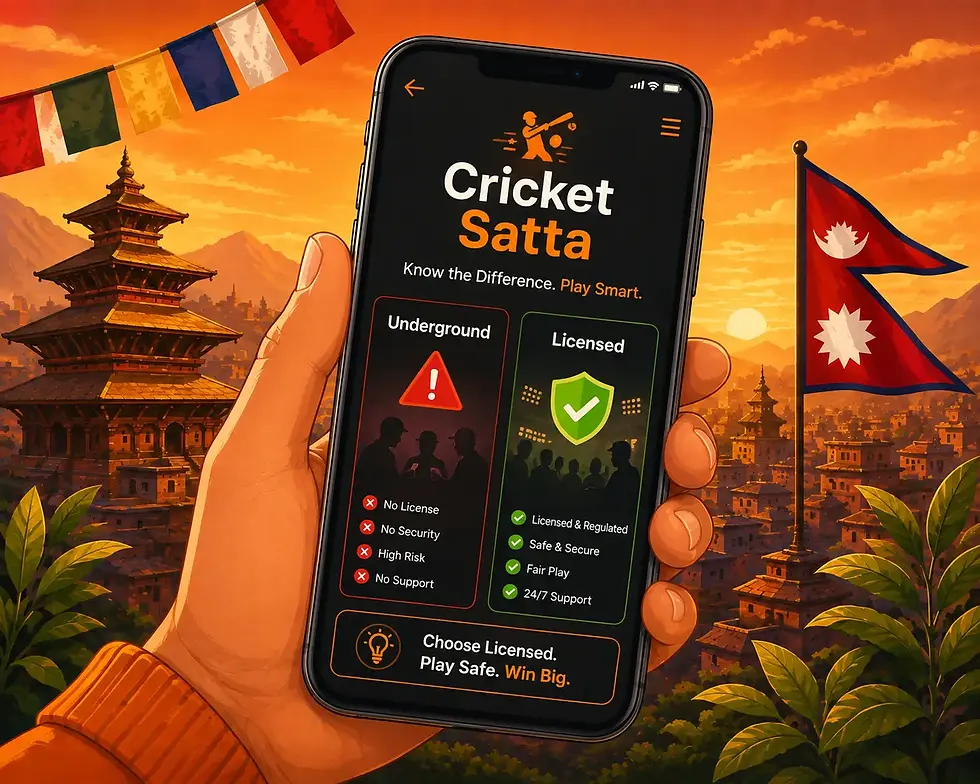
A few warning signs come up again and again in this space, and they're worth knowing:
Copying a trusted payment brand's name. Some shady sites tack a number or letter onto a well-known local payment brand's name to create a fake sense of "official partnership." In reality, legitimate payment providers don't authorize third-party gambling sites to use their name like that.
Licensing claims you can't verify. The site says it's "licensed," but there's no matching certification body you can check, or the link just leads nowhere.
No real customer support. No 24/7 contact, no clear way to reach anyone, or support that only ever gives vague, non-answers.
Promises that sound too good to be true. Words like "guaranteed profit" or "100% safe" are themselves a red flag — legitimate platforms tend to describe their services more carefully, with realistic terms attached.
If you want a deeper look at how to evaluate a platform properly, our Dhani789 review page walks through the fuller set of criteria we use.
What a Licensed, Trustworthy Platform Actually Looks Like
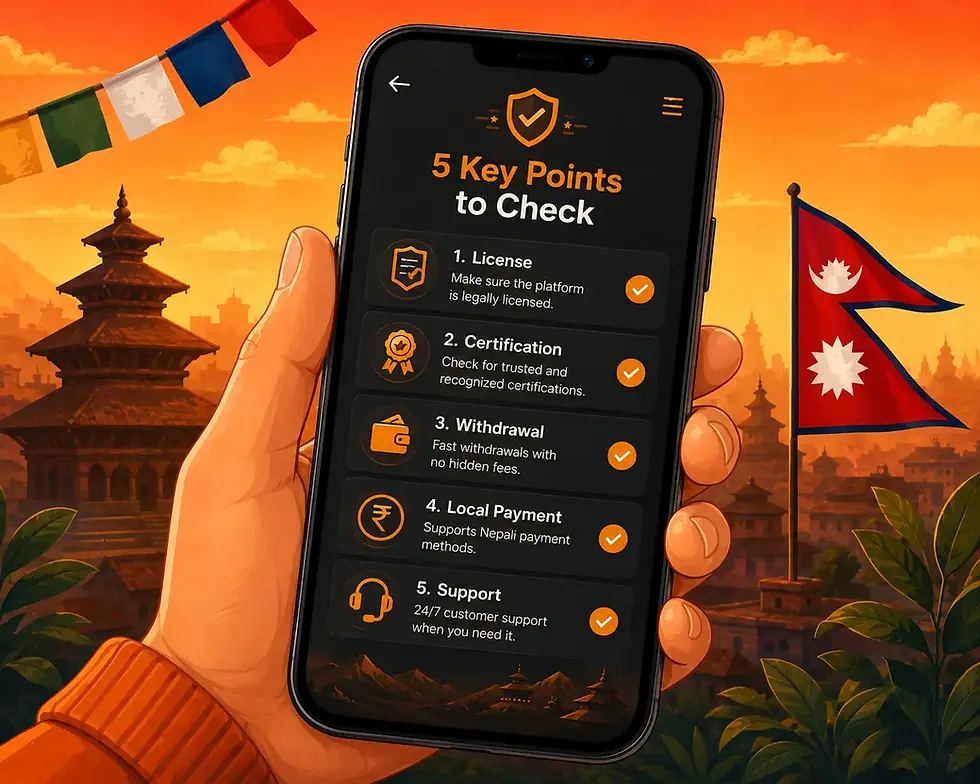
A transparent platform usually shares a few things in common:
Verifiable licensing and certification. Look for recognized names like Gaming Commission (GC) or PAGCOR for licensing, and eCOGRA or BMM Testlabs for independent fair-play certification. These are worth spending a few minutes checking yourself rather than just taking the site's word for it.
A clearly stated affiliate relationship. If a site earns commission through referral links, it should say so plainly through an affiliate disclaimer — not bury it or leave it out entirely.
Security measures listed openly. Things like SSL encryption and fair-game verification should be stated clearly on the site, not something you have to dig for or guess about.
A Note on Responsible Gaming
Regardless of platform choice or the regulatory picture, gambling always carries financial and emotional risk. Set clear time and budget limits for yourself, treat it as entertainment rather than a way to make money, and if you notice gambling becoming hard to control — for yourself or someone close to you — reach out for support sooner rather than later. Our responsible gaming page has more resources and simple ways to check in with yourself. We support initiatives like Be Gamble Aware.
FAQ
Q1: Is online gambling officially regulated in Nepal?
Right now, there's no single, widely agreed-upon answer — sources disagree and the picture stays unclear. When choosing a platform, it's more useful to check for transparent, verifiable licensing and certification than to rely on any one source's claim.
Q2: Is 1xBet illegal in Nepal?
The legal status of any one cross-border platform involves regulatory complexity that doesn't have a widely recognized, clear-cut answer. Rather than judging a single brand, it helps more to build the habit of checking any platform's licensing and certification for yourself.
Q3: How can I tell if a betting site is safe?
Check for verifiable licensing and third-party certification, a clear affiliate disclaimer, working customer support, and be wary of sites that promise guaranteed profits — all of these are practical signals worth checking.
Q4: What certifications should a licensed platform have?
Common names to look for include Gaming Commission (GC) and PAGCOR for licensing, plus eCOGRA and BMM Testlabs for fair-play certification. You can look these bodies up directly to confirm a site's claims.
Q5: If a site claims to officially partner with eSewa or Khalti, how should I take that?
eSewa and Khalti are widely used local payment services, but that doesn't mean they officially partner with or endorse any specific gambling platform. Any site claiming an "official partnership" is worth double-checking — legitimate platforms usually just say they "support" that payment method, not imply an official endorsement.

Comments